Commemorating the Battle of the Somme, 110 years later

I’m deeply honoured to have been invited to sing for the 110th commemoration of the Battle of the Somme.

The first day of the Battle of the Somme, 1st July 1916, was the bloodiest day in British military history, with around 57,000 casualties in a single day.

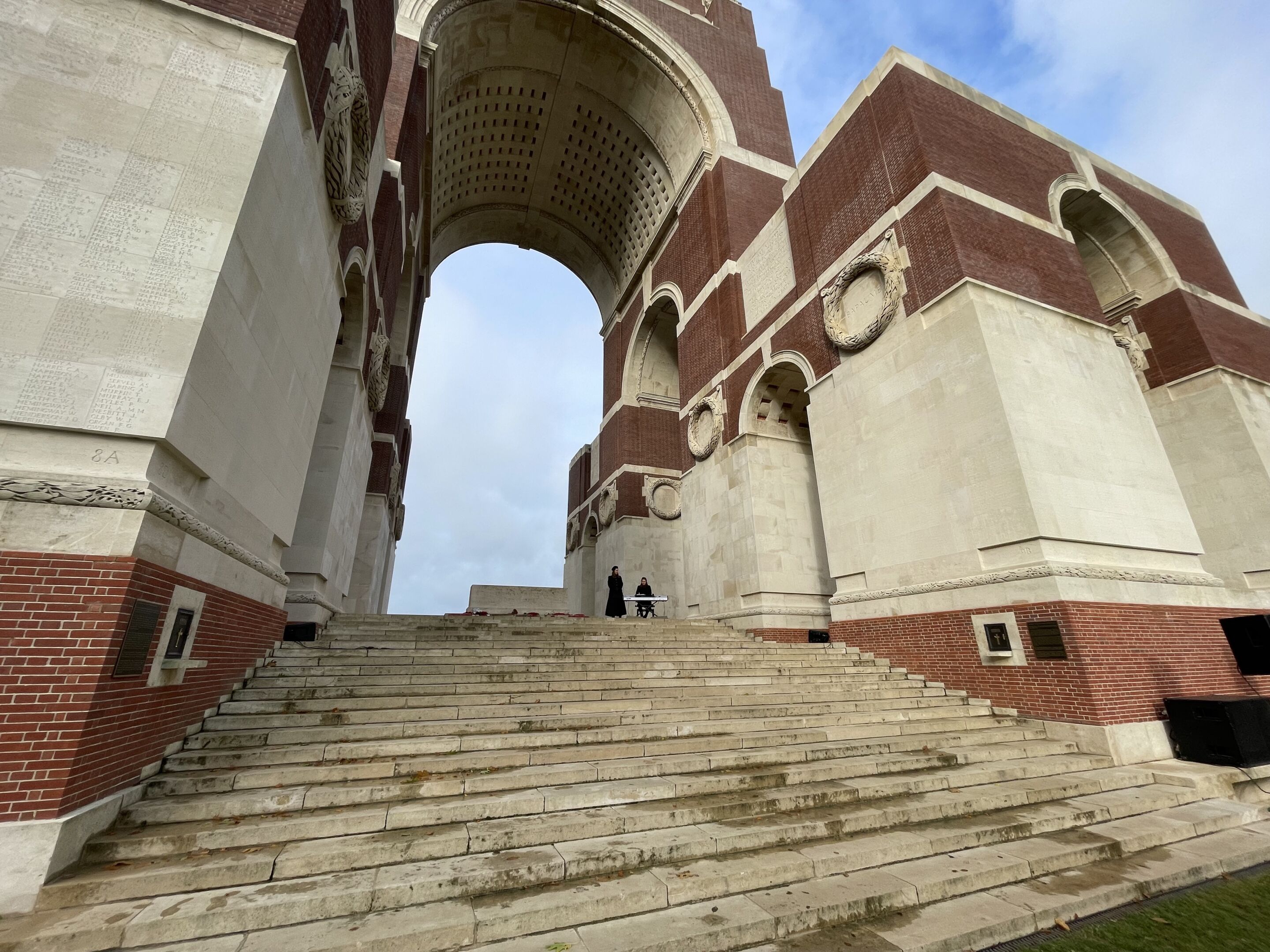
Due to the extreme conditions – men and boys fighting machines in heavy mud – many of the dead were missing, either blown to pieces or sunk in the mud. The names of the missing are recorded on the Thiepval Memorial: over 72,000 men and boys from Britain, Ireland, and South Africa. The tragedy for their relatives and friends must have been immense: not knowing if the person would ever return, worrying that they were still alive but suffering or that they had been taken prisoner. The huge monument reflects this tragedy: it was described by F.R. Durham as “an empire of the silent dead.”

I will sing at the Thiepval Memorial in a ceremony on 1st July. For tickets and further information, please use this link.

I will also sing at the Ulster Tower, Northern Ireland’s national war memorial, and for the 16th Irish Division at their memorial at Guillemont. For more information, please see this webpage.

2026-06-12T12:55:12+02:00June 10th, 2026|

D-Day 82 in Grangues, France

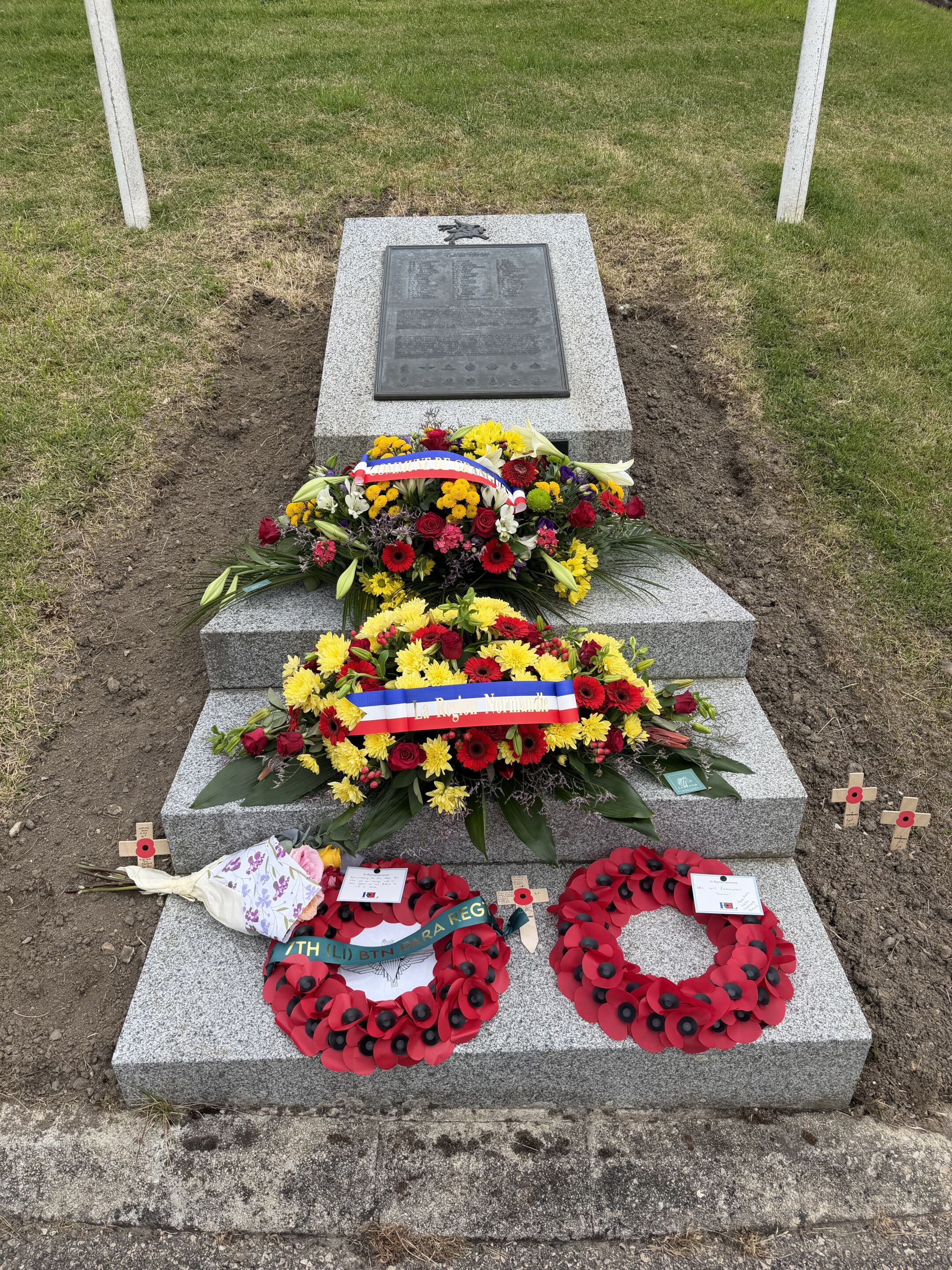
The commune of Grangues gathers each year on 7th June to commemorate four local aspects of the Battle of Normandy.

First we stood at the memorial to the British and Canadian airmen, some of whom died in crashes. Eight of the survivors were taken to the castle at Grangues and shot when they were prisoners of war. Allegedly they tried to escape, but I heard from descendants of those living in Grangues during the war that they were injured and the enemy did not wish to care for them, so they were shot at close range. I sang ‘Going Home’ and led the anthems.

We then made our way to the doors of the church to commemorate the civilians of Grangues who died in the war. The list is uncomfortably long for such a small commune, the surnames the same as members of the organisation and the graves in the church cemetery.

Third, we went to the ashes of Wally Trout, who parachuted into Grangues when his plane caught fire and hid in the valley. He was taken prisoner and sent to a camp Stalag 4B near Dresden. He survived and witnessed the liberation of the camp by the Russians.

After the war, he returned regularly to Grangues and the area, and spoke to school children about the war. His message was clear: “never again.”

One of his final requests was that his ashes should be taken to Grangues, and this request was honoured. This year, I sang ‘Danny Boy’ at his memorial.

Finally, we went to a plaque for the French Resistance fighter Léon Tardy who lived in Grangues. Before he joined the resistance, in 1940, he sheltered two Englishmen who were unable to escape from Dunkerque, disguising them as seasonal workers from Bretons to masque their lack of French. Eventually, he organised their return to England. He also saved two Americans, three Canadians, and one Norwegian. In March 1944 he was arrested and deported: he died on 1stMay 1945. His motto was “Live free or die.”

2026-06-10T13:07:06+02:00June 10th, 2026|

Arromanches Veterans’ Parade

Arromanches is a commune on Gold Beach: a seaside town which reminds me a little of Scarborough. But unlike Scarborough, in the sea and on the beach, remains of the artificial harbours built to support the D-Day landings can still be seen. Eighty-two years ago, the beach was stormed as British and other allied troops made their way ashore.

For many years on 6th June, the town has hosted a veterans’ parade, with a short Act of Remembrance and a tasteful sing-a-long, in order to bring the more sombre commemorations on 6th June to a close. I’ve been singing there for the last eleven years.

Even though the moment feels joyful, there is still the lingering sense that the songs I sang were sung to raise the spirits of those going into a very tough battle, those who knew they – or their friends – might not survive. It is very much a double-edged sword.

Here is a short video showing the atmosphere: listen to the end to hear 100 year old veteran Ken Hay take over the singing.

2026-06-10T13:07:18+02:00June 10th, 2026|

Bayeux Cathedral for D-Day 82

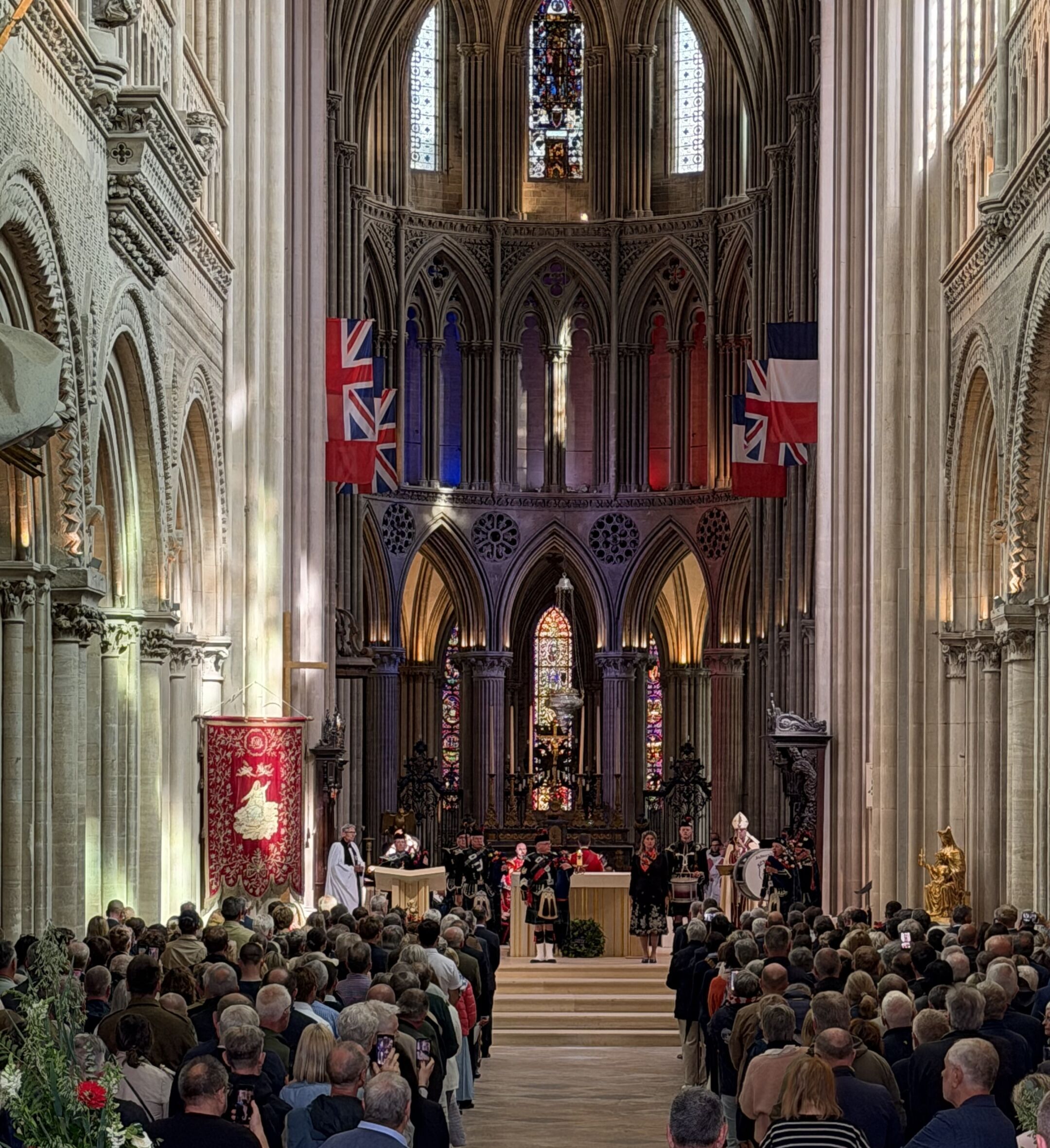
This year, the Commonwealth War Grave Commission’s ceremony at Bayeux Cathedral was supported by the British Army Band Tidworth, Jedburgh Pipe Band, and Portsmouth Cathedral Choir, and led by the Bishop of Bayeux and the Rev. Dr. Jonathan Knight.

I helped behind the scenes planning the Order of Service, and I felt there were some very beautiful moments. The Torch of Peace was anticipated by a beautiful performance of Morten Lauridsen’s ‘O Nata Lux,’ and brought in to ‘Nimrod.’ At the end, we sang “The Day Thou Gavest” which was followed by “Sunset,” complete with the lowering of the standards. Tosh MacDonald, the Pipe Major, played the lament walking from the west door of the church to the alter, echoing the path of the Torch of Peace and perhaps linking the sacrifice of the fallen to the peace we enjoy today.

I sang the ‘Ave Maria’ attributed to Caccini after the Act of Remembrance, and led ‘Highland Cathedral’ after the service.

2026-06-10T13:07:24+02:00June 10th, 2026|

At the statue of Field Marshal Bernard Law Montgomery

The Spirit of Normandy Trust organised their annual ceremony at ‘Monty’s’ statue. This year, two British veterans, Ken Hay and Henry Rice, were present, making the pilgrimage to the battle grounds of Normandy. Ken Hay spoke about seeing the names on the memorial and being able to remember the faces.

Henry David Montgomery, 3rd Viscount Montgomery of Alamein gave a speech together with representatives of the region. There was a strong presence from the British Armed Forces, including the Air Cadets and members of the Gurkha Regiment. It was really moving to see the veterans lay their wreaths and to experience the warm support of the public.

I led the hymns and anthems and sang with Jedburgh Pipe Band during the ceremony.

2026-06-10T13:07:29+02:00June 10th, 2026|

At the grave of William Cliffe

This year’s trip to Normandy began with a small ceremony at a single grave. Private William Joseph Cliffe, a batman, was only twenty when he was shot whilst delivering a message for Captain ‘Chum’ Budds. Chum visited the grave every year until 2004, having lived with the sense of guilt that it was due to his request that Cliffe was killed. His nephew, Shaun Caveney, continued the tradition and handed it to Paul Foster.

It is intensely poignant visiting a single grave and hearing the story of one person from the Normandy Campaign. Sometimes the scale of the tragedy of war becomes clouded in the face of statistics: hearing a single person’s story restores the focus on the human cost.

2026-06-10T13:07:37+02:00June 10th, 2026|

Commemorating D-Day 82 years later

I’ll be travelling to Normandy to sing for the D-Day commemorations, including British, Canadian, and French ceremonies in Vauville, Colleville-Montgomery, Bayeux Cathedral, Arromanches, and in the beautiful commune of Grangues, for organisations including the Spirit of Normandy Trust and the Commonwealth War Graves Commission. I’ve also worked behind the scenes for the latter putting together an Order of Service for the ceremony in Bayeux Cathedral, which will have some very beautiful moments.

2026-06-10T12:57:55+02:00May 30th, 2026|
Go to Top